
Armenia Through the Ages: From Ancient Kingdom to Modern Nation
Armenia Through the Ages: From Ancient Kingdom to Modern Nation
by @arm_armen
This timeline traces Armenia's rich and complex history spanning over two millennia, from its emergence as one of the world's earliest civilizations through periods of independence, foreign rule, tragedy, and modern statehood. It chronicles the key political, cultural, and religious milestones that have shaped Armenian identity and the nation's place in the Caucasus region.
Foundation of Erebuni Fortress
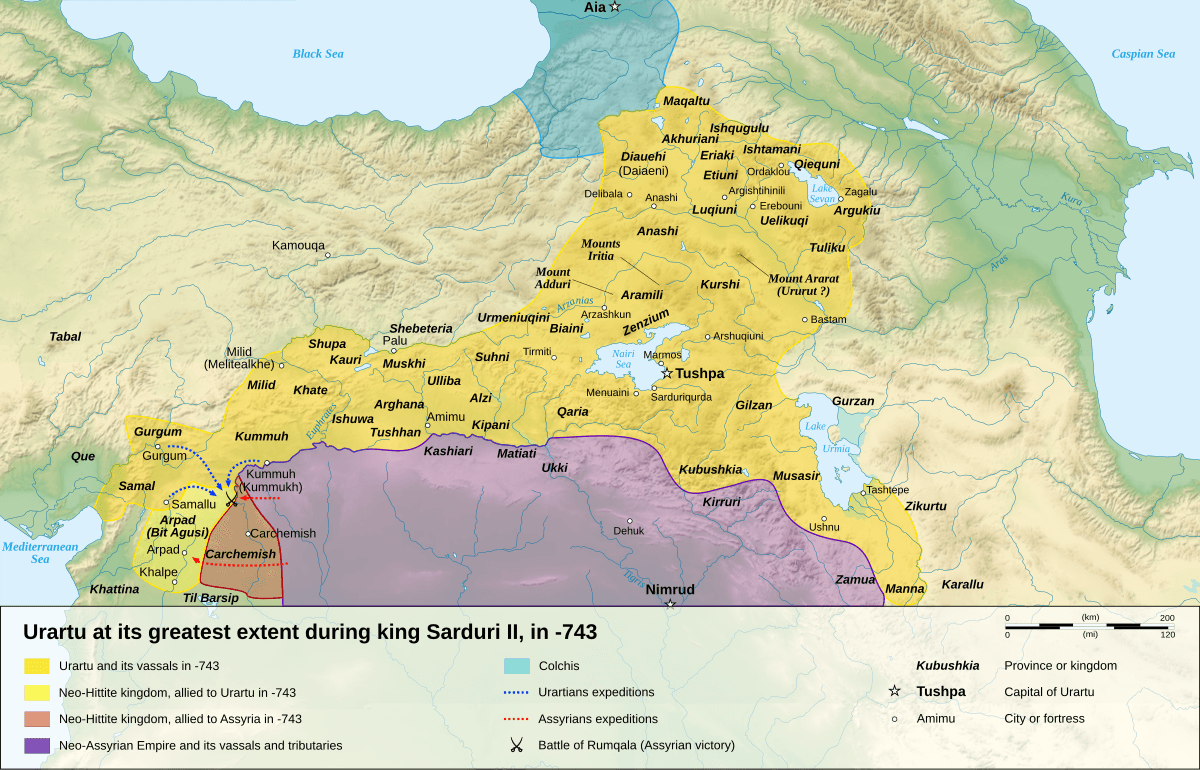
King Argishti I of Urartu established the fortress of Erebuni on the Ararat plain, marking the foundation of what would become modern Yerevan. The fortress served as a major administrative and religious center using 6,600 prisoners of war for its construction.
Erebuni (modern Yerevan)
Fall of Urartu Kingdom
The Medes under Cyaxares captured the Urartian capital of Van, effectively ending the sovereignty of the Kingdom of Urartu. This collapse paved the way for the establishment of the Orontid dynasty in Armenia.
Van
Establishment of Artaxiad Dynasty
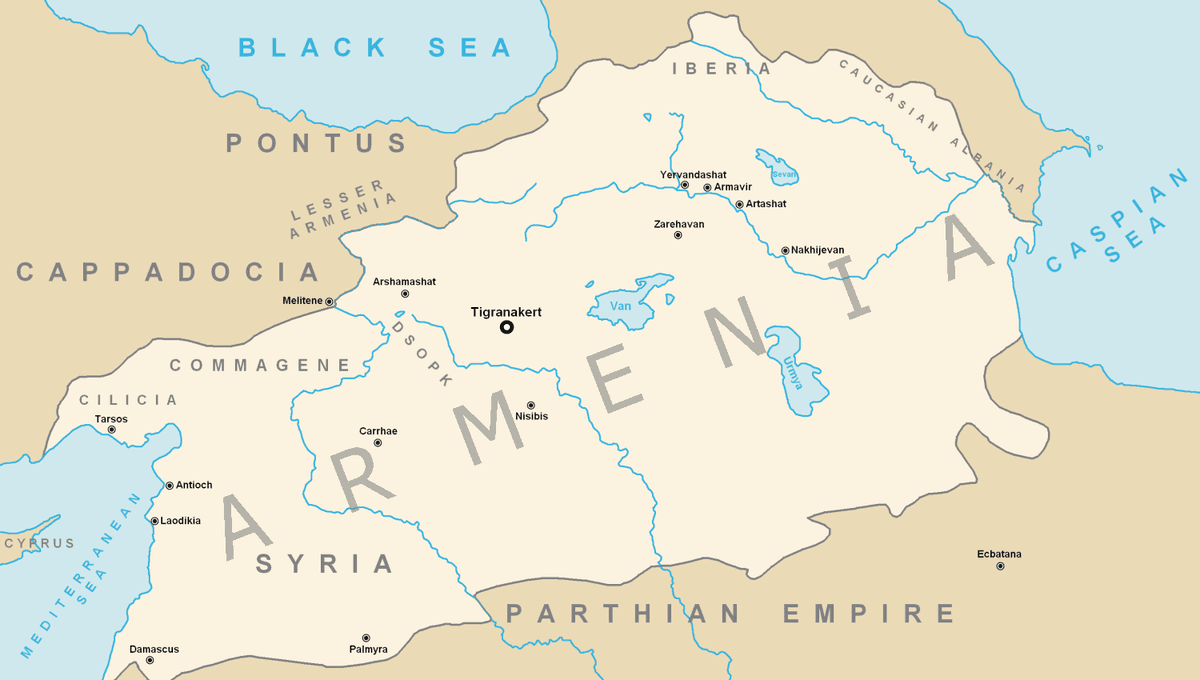
Artaxias I founded the Artaxiad dynasty and established the Kingdom of Greater Armenia as a Hellenistic successor state. This marked the beginning of an independent Armenian kingdom that would reach its zenith under later rulers.
Greater Armenia
Armenian Empire Under Tigranes the Great
Greater Armenia reached its territorial zenith under Tigranes the Great, extending rule over parts of the Caucasus, Anatolia, Iran, Israel, Syria and Lebanon. This period represented Armenia as one of the most powerful states east of Rome.
Greater Armenia
Death of Tigranes the Great
Tigranes the Great died after ruling Armenia as an ally of Rome following his military defeat by Pompeius. His death marked the end of Armenia's greatest period of territorial expansion.
Armenia
Trajan's Annexation of Armenia
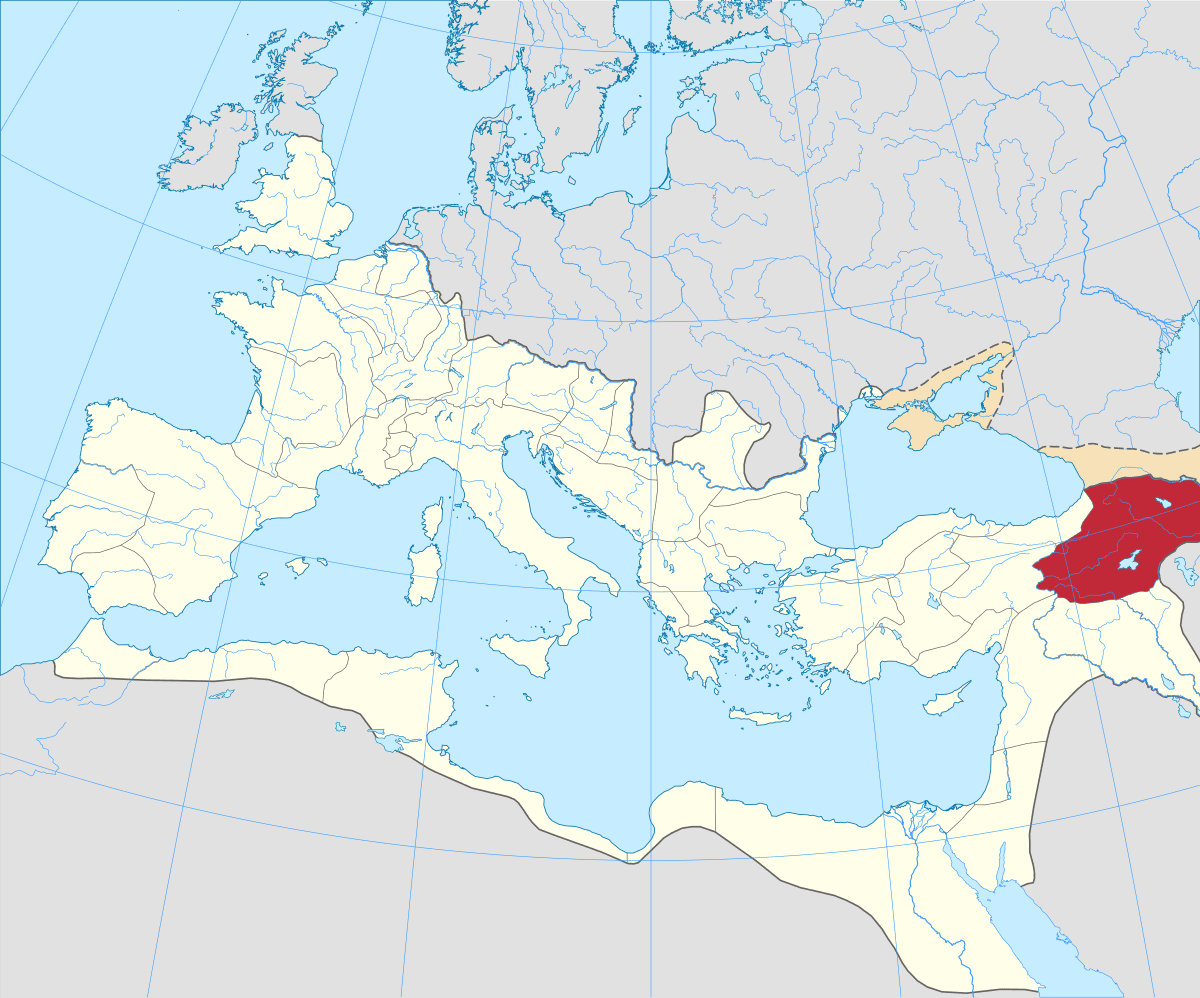
Roman Emperor Trajan marched from Antiochia to conquer Armenia, capturing the capital Artaxata and creating a short-lived Roman Province of Armenia. He deposed the Parthian-imposed king Parthamasiris and annexed the territory.
Armenia
Christianity Adopted as State Religion
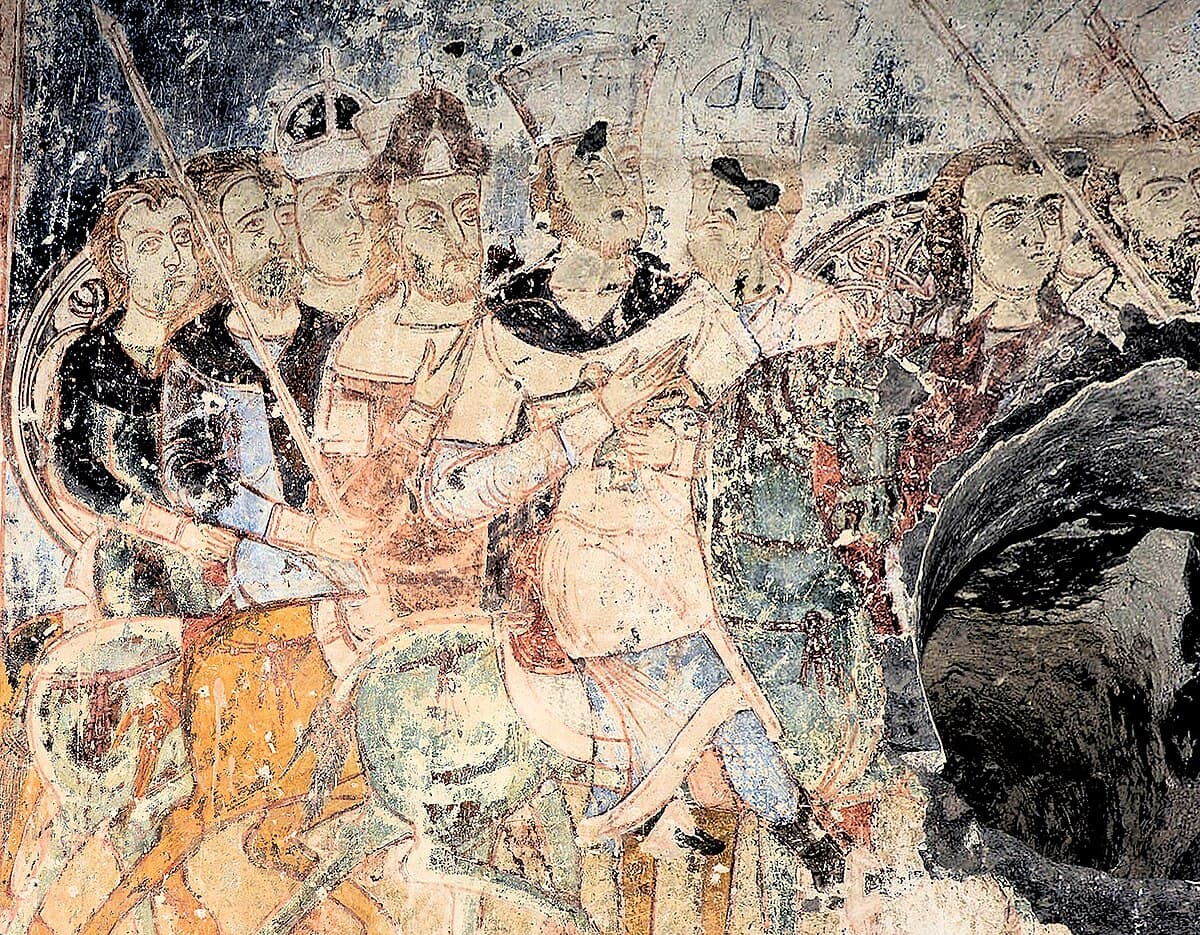
Armenia became the first nation in the world to adopt Christianity as its official state religion under King Tiridates III. This pivotal decision established Armenia's distinct religious identity that persists to the present day.
Armenia
Creation of Armenian Alphabet
Mesrop Mashtots created a unique alphabet specifically designed for the Armenian language with support from the king. This achievement ushered in a Golden Age and significantly strengthened Armenian national identity.
Armenia
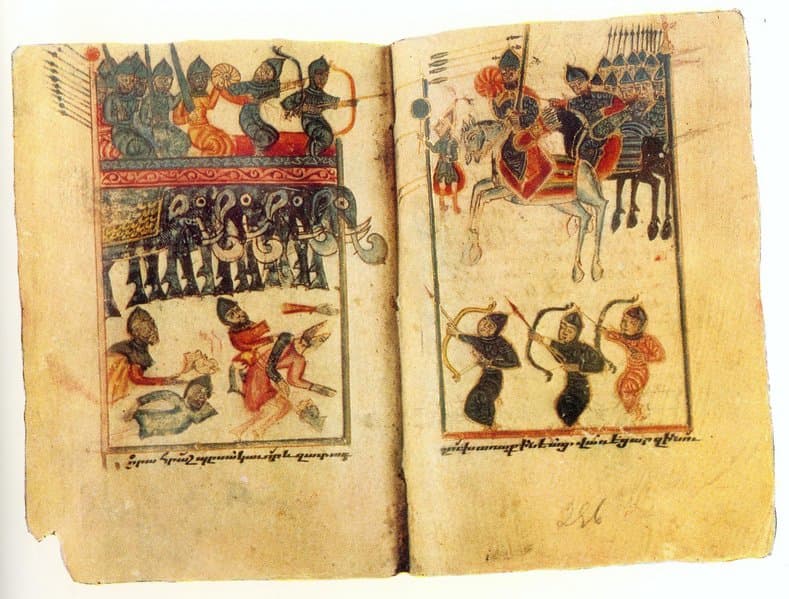
Battle of Avarayr
Armenian rebels led by Vartan Mamikonian fought against a massive Persian army attempting to reimpose Zoroastrianism on Christian Armenians. Though a military defeat with 66,000 Armenians facing up to 220,000 Persians, it led to eventual religious freedom guarantees.
Avarayr
Treaty of Nvarsak
Following the Battle of Avarayr and subsequent guerilla warfare, this treaty between Armenians and Persians guaranteed religious freedom to Christian Armenians. It represented a victory for Armenian resistance despite earlier military defeat.
Persia
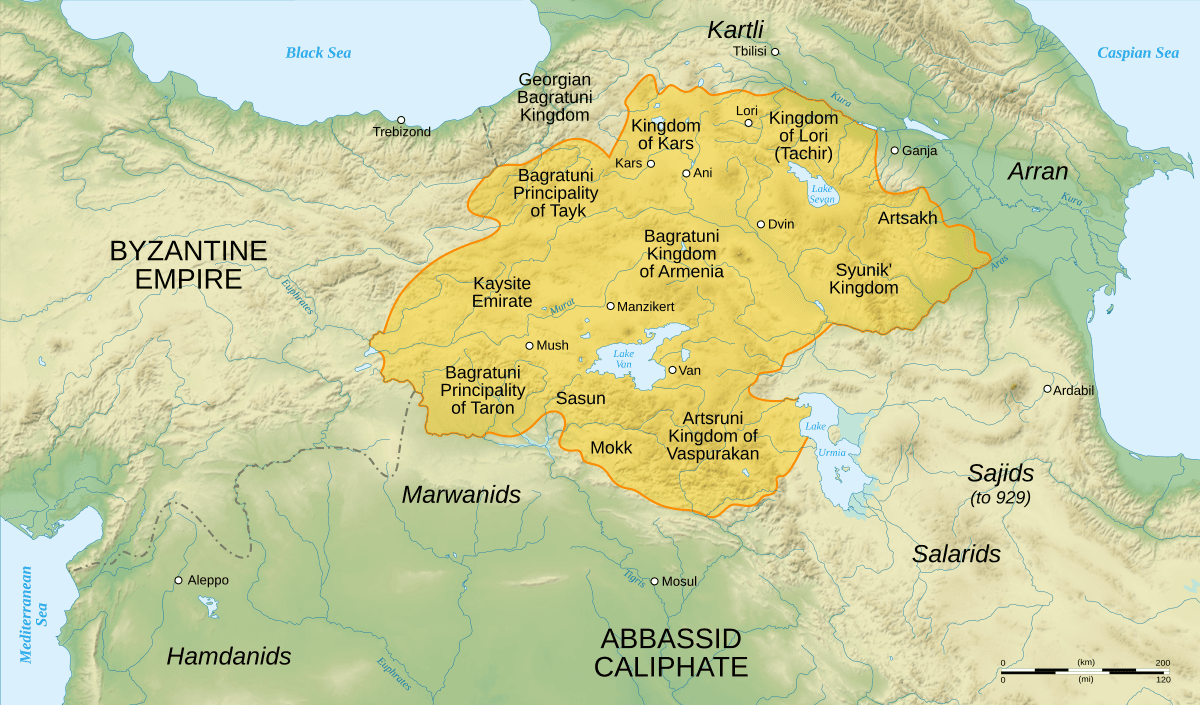
Byzantine Recognition of Bagratid Armenia
The Byzantine Empire officially recognized Bagratid Armenia as a sovereign kingdom, following similar recognition by Baghdad the previous year. This dual recognition solidified Armenia's status as an independent feudal kingdom.
Armenia
Construction of Ani as Armenian Capital
The city of Ani was constructed as the new capital of Armenia during the kingdom's apogee under the Bagratid dynasty. The city became a major cultural and political center of medieval Armenia.
Ani
Byzantine Capture of Ani
The Byzantine Empire conquered the Armenian capital of Ani, exploiting the weakened state caused by Armenia's feudal system. This marked a major setback for Armenian independence.
Ani
Seljuk Conquest of Ani
The Seljuk dynasty under Alp Arslan captured the Armenian capital of Ani from Byzantine control. This conquest further weakened Armenian sovereignty in the region.
Ani
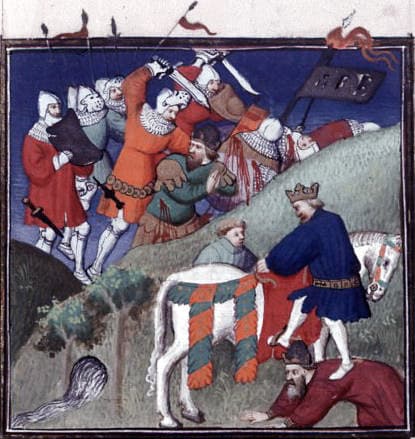
Battle of Manzikert
The Seljuk Turks defeated Byzantine forces at Manzikert and subsequently conquered the rest of Greater Armenia and much of Anatolia. This battle ended Christian leadership in Greater Armenia for nearly a millennium.
Manzikert
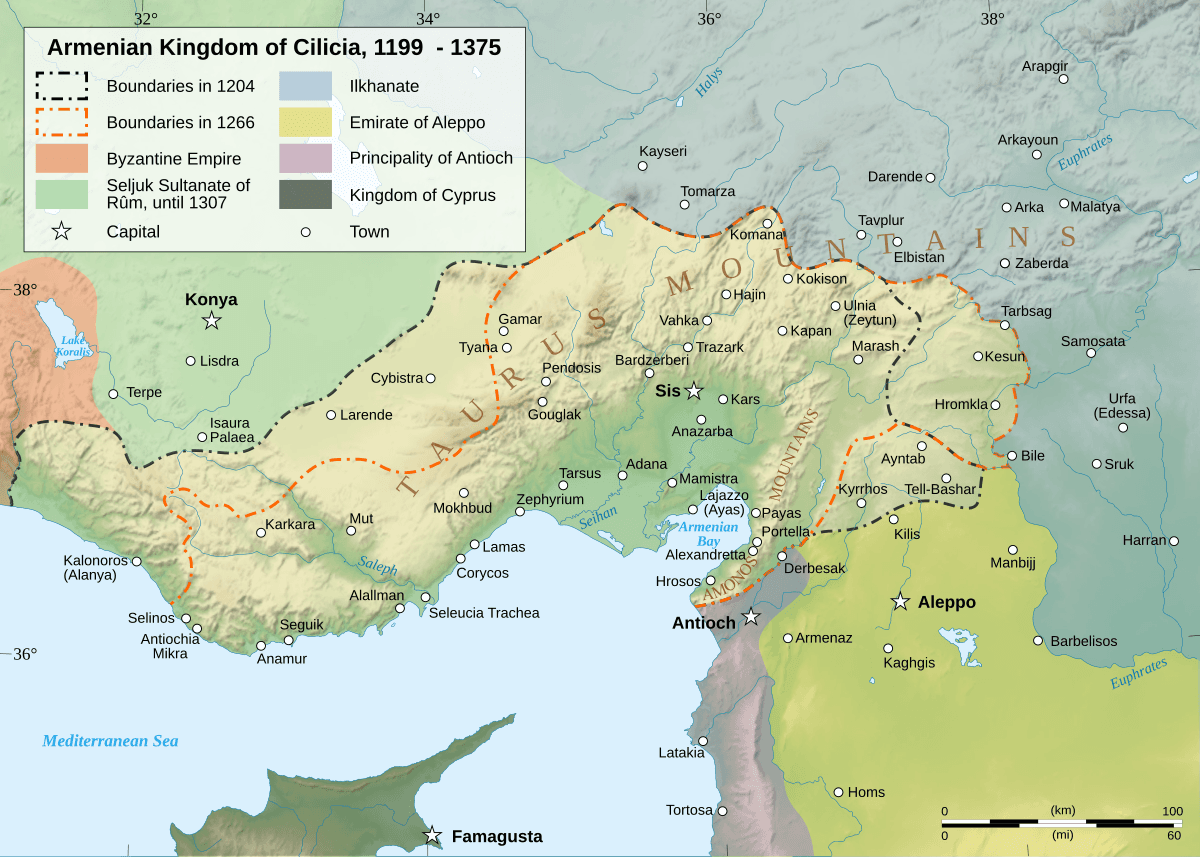
Coronation of Levon I
Levon I was crowned king, establishing the Armenian Kingdom of Cilicia as a formally recognized kingdom. This marked the transformation of Armenian Cilicia from a principality to a kingdom.
Cilicia
Fall of Armenian Kingdom of Cilicia
The Armenian Kingdom of Cilicia was destroyed after nearly two centuries of maintaining political autonomy through diplomacy and military alliances. This ended the last independent Armenian kingdom for centuries.
Cilicia
Safavid Persian Rule Over Armenia
Much of Armenia came under control of the Safavid Persian Empire in the early 16th century. Over subsequent centuries, Armenia became divided between Ottoman and Persian rule.
Armenia
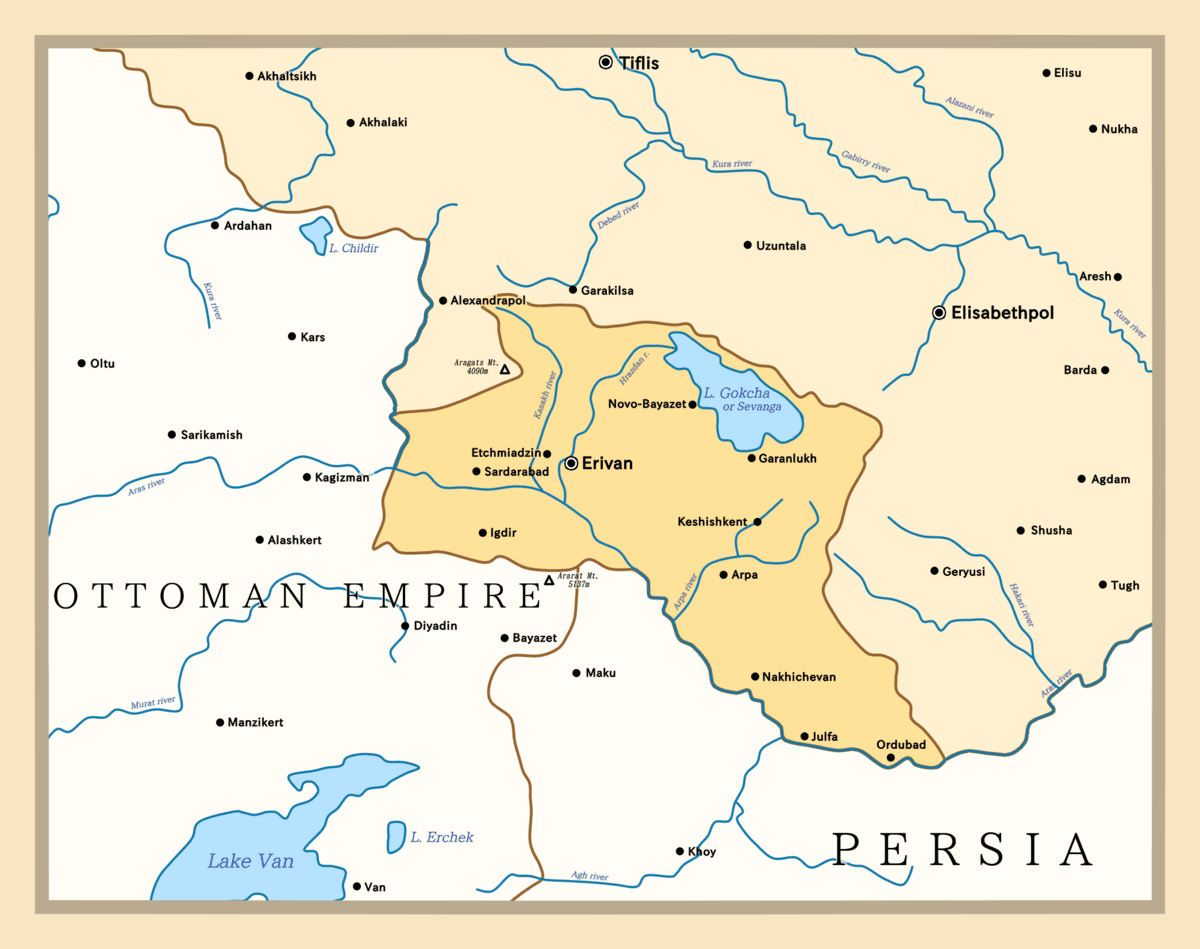
Russian Conquest of Eastern Armenia
The Russian Empire conquered Eastern Armenia during the 19th century, completing the division of Greater Armenia between the Ottoman and Russian empires. This partition would shape Armenian history for the next century.
Eastern Armenia
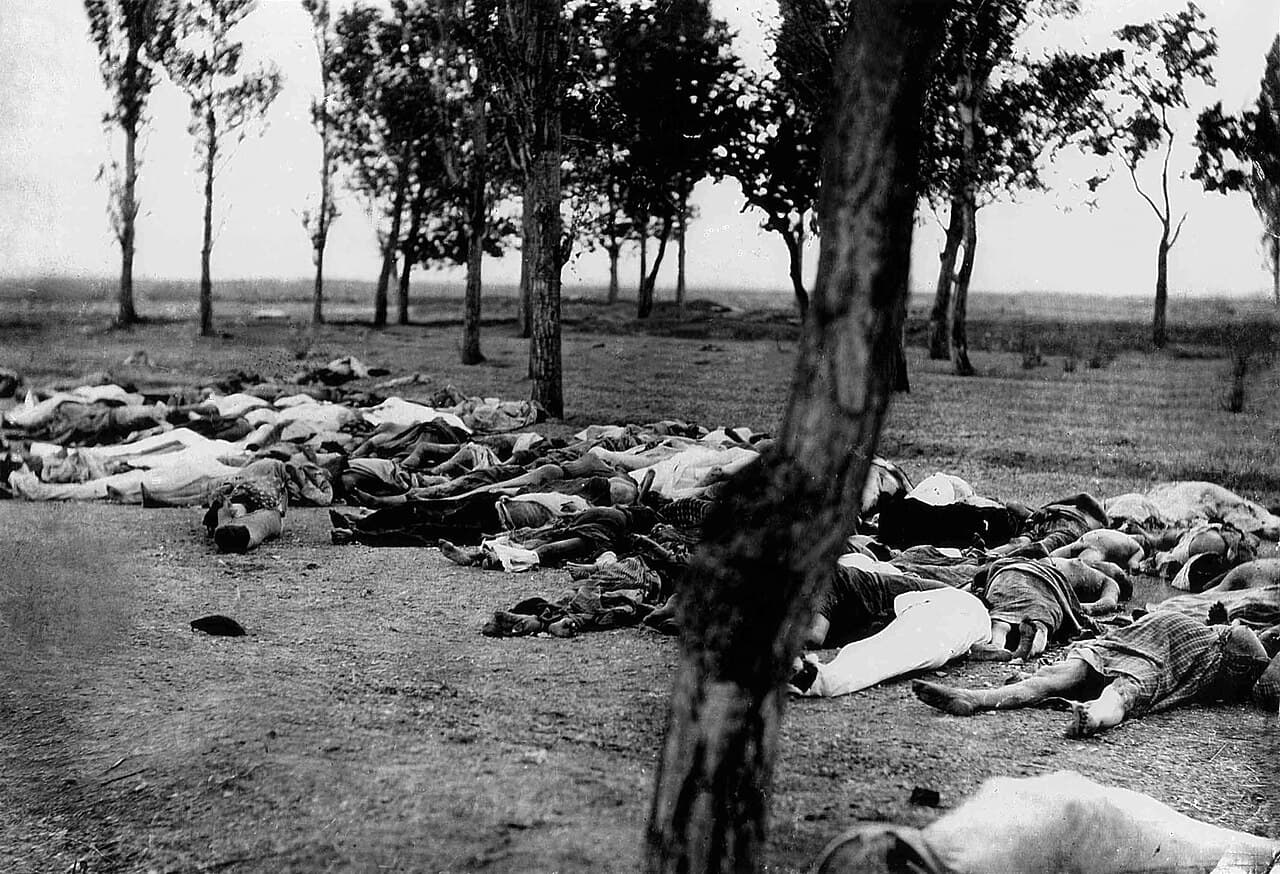
Armenian Genocide
The Ottoman government systematically killed up to 1.5 million Armenians and dispersed many more throughout the world via Syria and Lebanon. This genocide devastated the Armenian population in their ancestral homeland.
Ottoman Empire
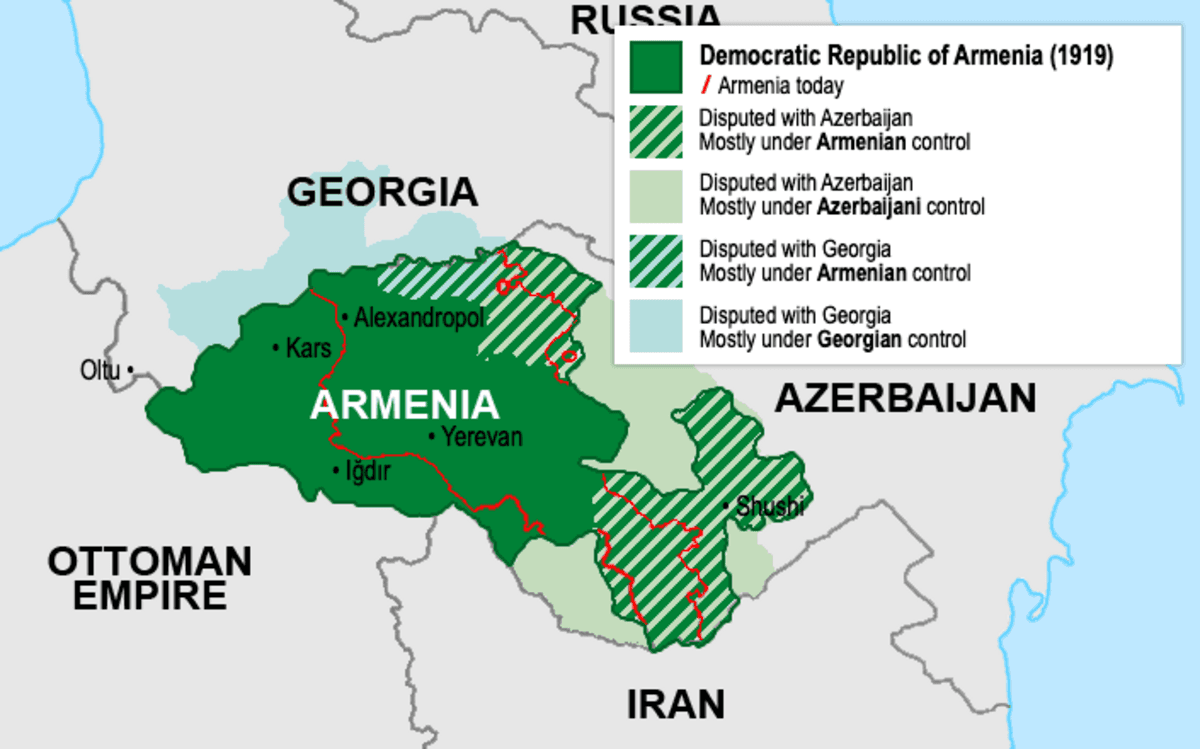
Declaration of First Republic of Armenia
An independent Republic of Armenia was established in Eastern Armenia following the collapse of the Russian Empire. This marked the first independent Armenian state in centuries.
Yerevan
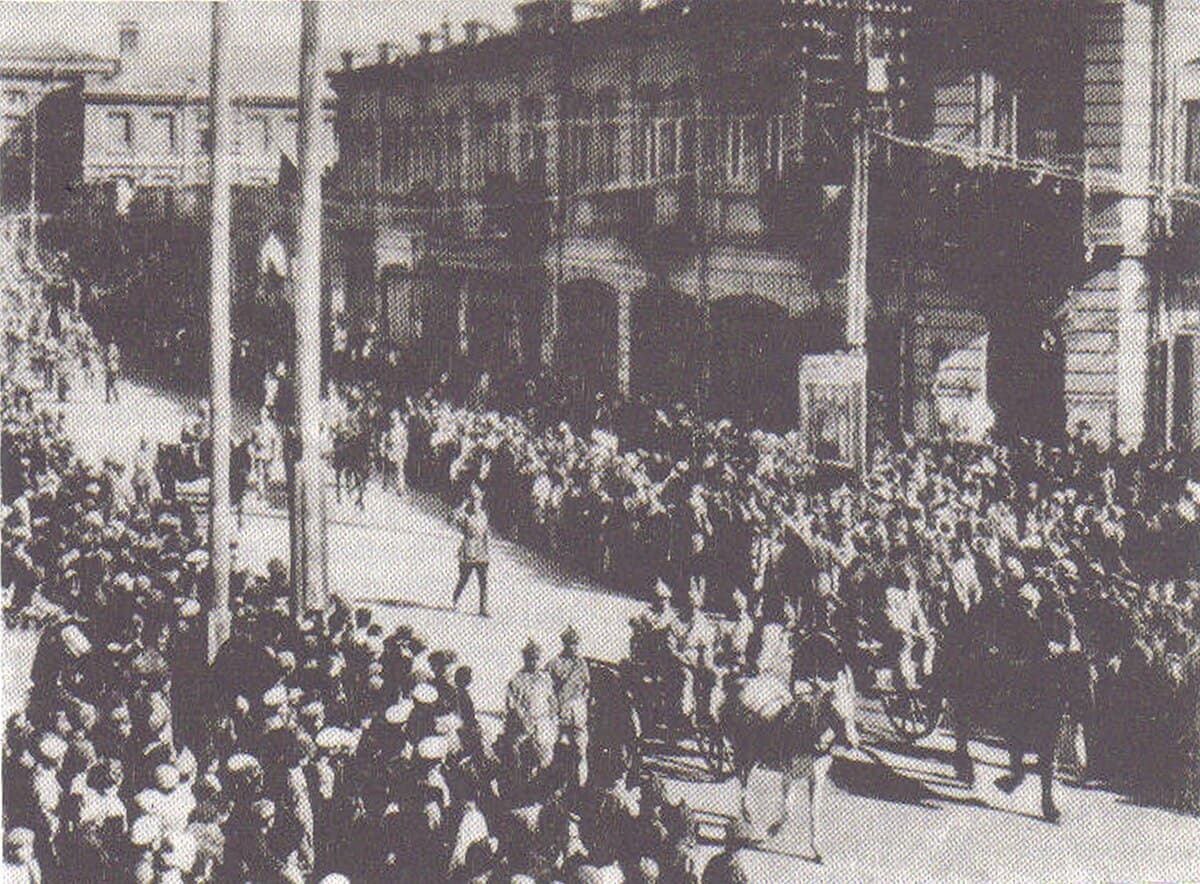
Soviet Incorporation of Armenia
The Republic of Armenia was incorporated into the Soviet Union as the Armenian Soviet Socialist Republic. This ended the brief period of independence that began in 1918.
Armenia
Declaration of Independent Republic of Armenia
With the dissolution of the Soviet Union, the modern-day independent Republic of Armenia was established. This restored Armenian sovereignty after seven decades of Soviet rule.
Yerevan